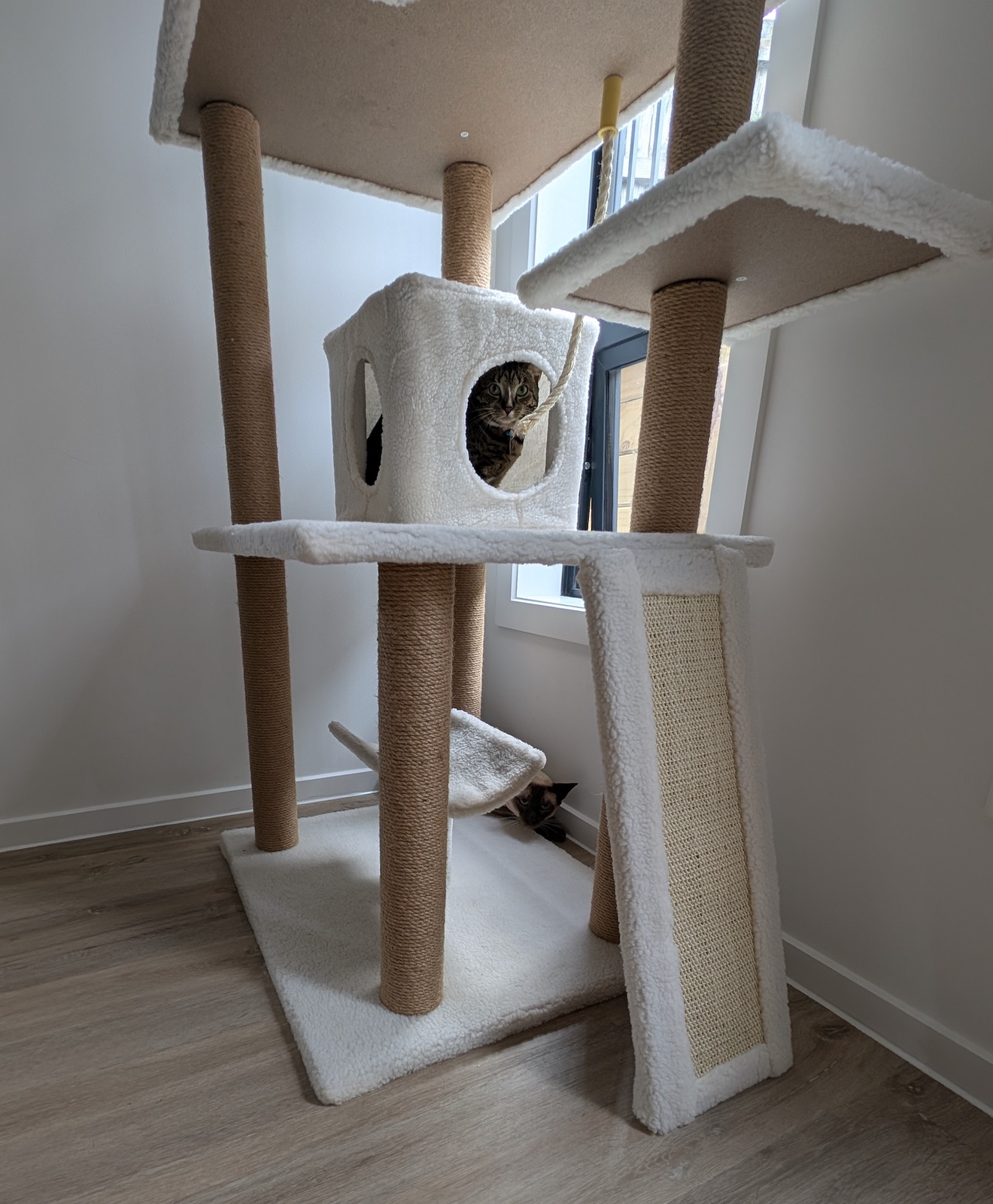
If two cats share your home, it can seem obvious that they should also share accommodation at a cattery. Sometimes that is exactly right. A genuinely bonded pair may settle more easily with a familiar companion nearby.
But living under the same roof does not always mean two cats are close friends. Some simply divide the house into comfortable territories and politely avoid each other. A boarding setup should reflect the relationship your cats actually have, not just the fact that they have the same address.
1. Start with the relationship you see at home
The best clue is what your cats choose to do when they have plenty of space. Cats in the same social group often seek each other out. Cats that merely tolerate each other may eat in the same kitchen and sleep in the same room, but usually keep a careful distance.
When comparing boarding options, ask how the cattery decides whether cats should stay together. This is one of the practical details worth checking alongside the questions in our guide to choosing the best cattery in Nelson.
2. Signs your cats may be a bonded pair
Look for repeated, relaxed behaviour rather than one cute photo on the sofa. Signs that cats are comfortable in the same social group can include:
sleeping while touching or curling up closely together
grooming each other around the head and neck
rubbing their faces or bodies against each other
greeting with relaxed body language or touching noses
seeking each other out for play, rest or company
No single behaviour proves that two cats must board together. The overall pattern matters. If they regularly choose closeness and appear relaxed around shared space, familiar company may help during a stay away from home.
3. Signs that separate spaces may be kinder
Some cats coexist well only because they can move to different rooms. In a smaller unfamiliar space, quiet tension can become much more obvious. Watch for one cat blocking doorways, food, water or litter trays; prolonged staring; repeated chasing; hissing; or one cat consistently leaving when the other arrives.
A peaceful-looking household is not always a bonded one. If your cats rarely touch, never groom one another and choose separate resting areas, tell the cattery. Separate accommodation may give both cats more control and a better chance to relax.
If either cat is easily unsettled, it also helps to share the details covered in our article on reducing stress for a nervous cat during boarding.
4. Remember that boarding changes the environment
New smells, sounds and routines can change how cats behave with each other. Two cats that are affectionate at home may want more personal space when they first arrive. Another pair may take comfort from sleeping near each other.
That is why a flexible plan is better than a rigid rule. Staff should be able to observe whether both cats are eating, drinking, toileting, resting and moving around comfortably. Keeping cats together should benefit both of them, not just the more confident one.
5. Shared accommodation still needs separate resources
Even close companions should not have to compete. A shared setup needs enough room for each cat to move away, rest and hide. Food and water should be easy for both cats to reach, and feeding may need to be supervised or separated if one cat eats faster or guards bowls.
Litter trays, beds, hiding places and elevated resting areas should also suit the number, mobility and confidence of the cats. For example, a younger cat may enjoy climbing while an older cat needs an easier route to food, water and a comfortable bed.
6. Tell the cattery the small details
Useful information is often very ordinary. Explain where your cats sleep, whether they eat side by side, who usually finishes first, whether they share litter trays comfortably and what happens when one wants to be left alone. Mention any history of fighting, guarding or stress, even if it happens only occasionally.
It also helps to describe each cat separately. One may be confident and playful while the other depends on predictable routines. Good multi-cat boarding is not about treating the pair as a single unit; it is about caring for two individuals who may or may not feel safer together.
7. Plan the stay around both cats
At Nelson Cat Hotel, our condos can be connected and the space can be adjusted to suit the cats staying in them. You can read more about our cat boarding services before deciding what information to include with your request.
Tell us how your cats behave together at home, and we can consider the most suitable setup for their stay. If keeping them together stops being comfortable for either cat, welfare comes before the original plan.
The right answer depends on your cats
Bonded cats may benefit from familiar company, while cats that simply tolerate each other may settle better with more separation. The kindest choice is the one based on their real relationship, with enough space and resources for each cat to feel secure.
When you know your travel dates, send us your booking request and include a short note about how your cats eat, sleep, play and share space at home.